
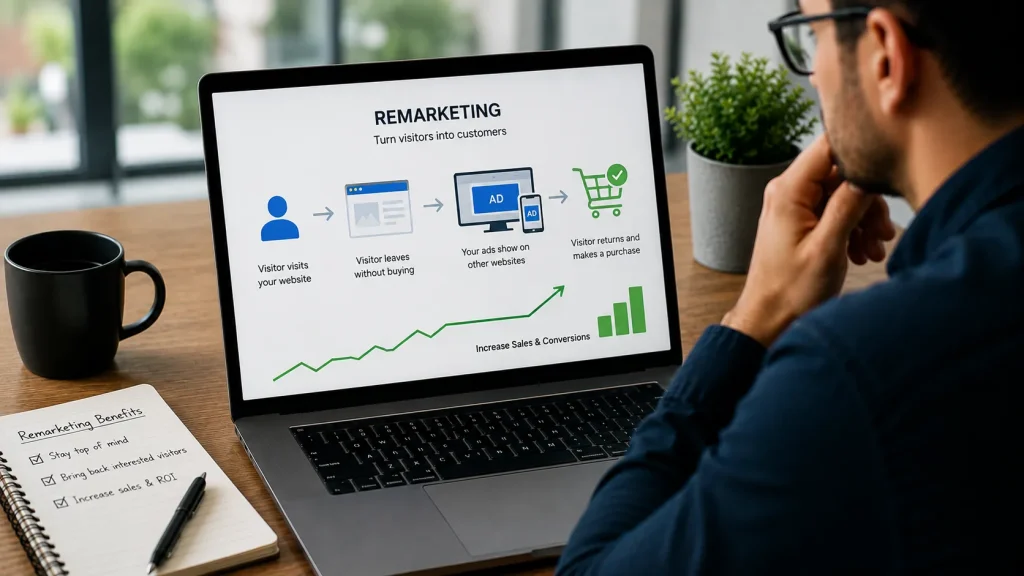
Remarketing helps businesses reconnect with people who have already shown interest in their products or services. This digital strategy targets previous website visitors with personalized ads across search engines, websites, and social media platforms. According to Google, businesses using remarketing campaigns often achieve higher conversion rates because users already know the brand.
Remarketing has become a major part of digital advertising. Data from Statista showed global digital ad spending reached $740.3 billion in 2025. Many companies allocate part of that budget to remarketing because returning visitors are more likely to complete purchases. Research from Invesp found that returning visitors convert up to 70% more often than first-time visitors.
We have seen small businesses use remarketing to recover abandoned carts and improve customer retention. Instead of focusing only on attracting new visitors, remarketing allows companies to maximize the value of existing traffic. This approach can reduce acquisition costs while increasing revenue. Understanding how remarketing works helps businesses create stronger campaigns and generate more sales.
How Remarketing Works
Remarketing uses cookies or audience lists to track people who interacted with a website or app. Once users leave without taking action, businesses can display relevant ads to them while they browse other platforms. These reminders encourage users to return and complete purchases.
Audience Segmentation Improves Results
Audience segmentation makes campaigns more effective. Businesses can separate visitors based on behavior, such as product page views or cart abandonment. Google Ads data shows segmented campaigns often deliver significantly higher engagement rates.
From our experience managing digital campaigns, personalized messages produce stronger results. Showing users the exact products they viewed creates familiarity and trust. Dynamic remarketing campaigns can automatically display previously viewed products, making the experience more relevant.
Here are common audience categories:
- Website visitors.
- Cart abandoners.
- Previous customers.
- Newsletter subscribers.
- App users.
- Product page viewers.
Types of Remarketing Campaigns
Remarketing offers several campaign options. Businesses should choose formats that match their goals and customer behavior. Each type provides unique advantages.
Display and Dynamic Remarketing
Display remarketing places ads across millions of websites in the Google Display Network. Dynamic remarketing goes further by showing users specific products they viewed earlier. Google reports that the Display Network reaches over 90% of internet users worldwide.
Search remarketing targets users performing related searches after visiting a website. Video remarketing allows brands to reconnect with people who watched content on YouTube. Email remarketing reaches subscribers with personalized promotions and reminders.
| Remarketing Type | Purpose | Best Use |
|---|---|---|
| Display Remarketing | Brand awareness | General visitors |
| Dynamic Remarketing | Product reminders | E-commerce stores |
| Search Remarketing | High-intent searches | Lead generation |
| Video Remarketing | Audience engagement | Brand campaigns |
| Email Remarketing | Customer retention | Existing subscribers |
Businesses often combine multiple formats to increase reach and improve conversion opportunities.
How Remarketing Can Increase Sales
Remarketing increases sales by keeping brands visible throughout the buying journey. Most consumers do not purchase during their first visit. According to the Baymard Institute, the average online cart abandonment rate reached 70.19% in 2025. Remarketing helps recover some of those lost opportunities.
Building Trust and Improving Conversion Rates
Repeated exposure creates familiarity. Marketing studies show consumers often require several interactions before making purchase decisions. Returning visitors usually spend more time on websites and have higher conversion rates.
We have observed that offering limited-time discounts through remarketing campaigns encourages hesitant buyers to act. Personalized promotions and product recommendations also improve customer satisfaction. Businesses that consistently engage previous visitors often see stronger brand loyalty.
Key benefits include:
- Higher conversion rates.
- Lower customer acquisition costs.
- Better brand recognition.
- Increased customer loyalty.
- Improved return on advertising spend.
- Recovery of abandoned carts.
A 2024 study by Criteo reported that retargeted customers are 43% more likely to convert compared with new visitors. These numbers explain why many businesses prioritize remarketing strategies.
Best Practices for Effective Remarketing
Successful remarketing campaigns require careful planning. Excessive ad exposure can annoy users and reduce performance. Frequency caps help maintain a positive experience.
Personalization and Performance Tracking
Personalization remains one of the strongest factors behind successful campaigns. Ads should match user interests and browsing behavior. Businesses should also exclude recent buyers from acquisition campaigns to avoid wasting budgets.
Based on our experience, testing different headlines and images improves campaign performance. Monitoring click-through rates and conversion metrics helps identify opportunities for optimization. Google Analytics and Google Ads provide detailed reporting tools for measuring results.
Important practices include:
- Segment audiences carefully.
- Use frequency caps.
- Personalize ad content.
- Monitor conversion rates.
- Test creative variations.
- Exclude converted users.
Continuous optimization ensures campaigns remain efficient and profitable over time. Get started with our in-depth resource on The Future of SEO: Trends You Can’t Ignore
Conclusion
Remarketing is a powerful strategy for reconnecting with interested customers and increasing revenue. By targeting previous visitors with relevant messages, businesses can improve conversion rates and strengthen brand awareness. Different remarketing formats provide flexibility for various goals and industries.
Data from Google, Criteo, and industry research confirms that returning visitors often deliver better results than new audiences. When businesses combine audience segmentation, personalization, and ongoing optimization, remarketing becomes an effective tool for sustainable sales growth and stronger customer relationships.